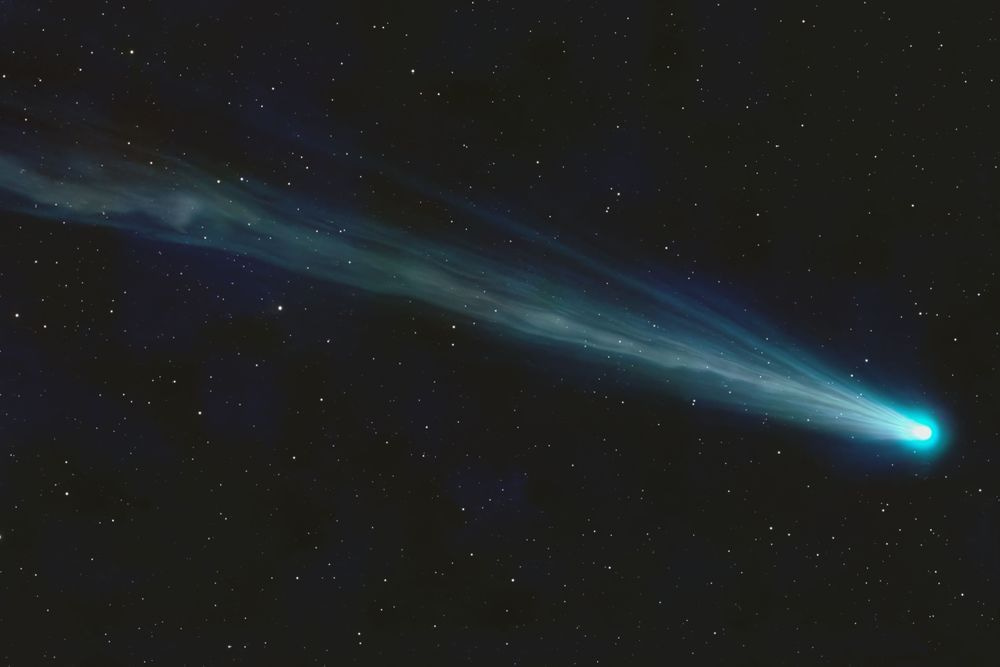
Comet C/2025 R3 Pan-STARRS stands out against a dark field of stars in this vertical astrophotograph. Its bright nucleus glows near the bottom of the frame, while a long, layered tail stretches upward through the image. Blue and teal tones trace its sweeping shape, contrasting with the surrounding points of starlight and emphasizing the comet’s remarkable scale.
The photograph was taken just before dawn on April 16, 2026. A telescope tracked the comet for 18 minutes during the observation, helping keep this moving object in view. The image offers a record of a particular moment in the night sky—and a close look at a celestial visitor that continues on its journey through space.
There’s a bit of astronomy encoded in the comet’s name. In the designation C/2025 R3, “C/” identifies a comet that is not classified as periodic; “2025” is its designation year; and “R3” indicates it was the third comet designated in the half-month period represented by the letter R. “Pan-STARRS” refers to the sky-survey program associated with its discovery. Comet tails form as a comet approaches the Sun and releases gas and dust; solar radiation and the solar wind help shape the material into tails. The blue-green appearance here describes the image’s recorded color, rather than identifying a specific tail composition.
For astronomy fans, this telescope-tracked photograph brings the details of a fleeting sky event into view and makes a distinctive focal point for a home, office, or observatory.